Categories
Cybersecurity

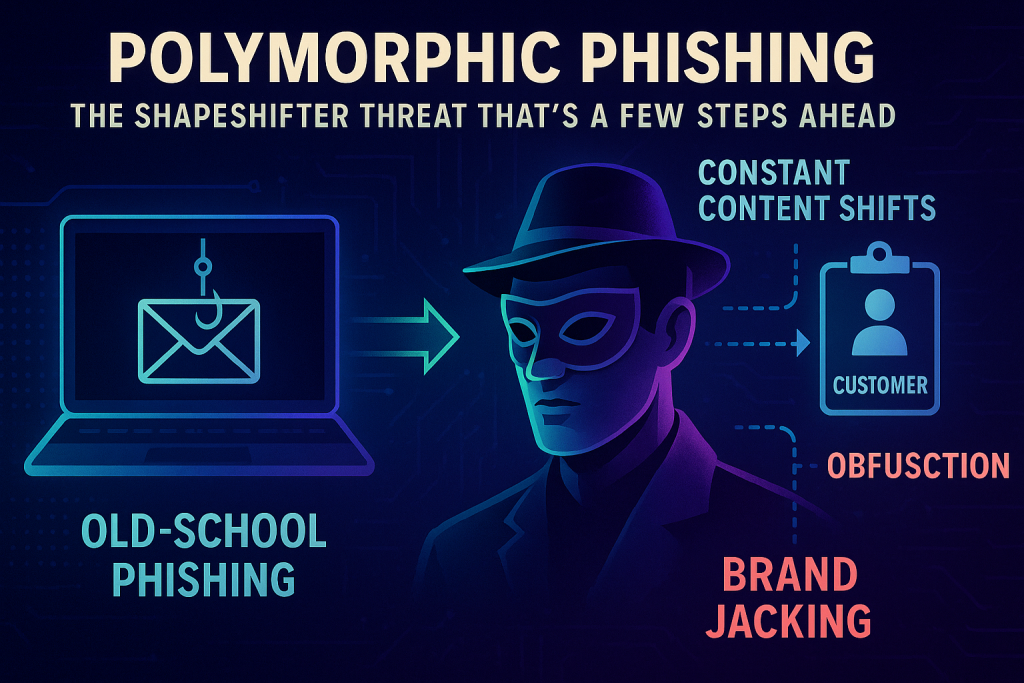
Polymorphic Phishing: The Shapeshifter Threat That’s a Few Steps Ahead


Phishing used to be as easy to spot as a cat in a dog park: misspelled names, weird email addresses, and “urgent” requests from long-lost Nigerian princes. Those were the good ol’ days. Now? The game has changed. Meet polymorphic phishing, the slick, ever-evolving cousin of traditional phishing that can shapeshift faster than your SIEM can blink.

This isn’t just phishing 2.0. This is phishing that’s gone to the gym, changed its hair, and started wearing a disguise. It’s changed more than you have since your high school yearbook picture 20 years ago, and it’s a serious threat to even well-defended networks. Let’s dig into what makes this chameleon of cybercrime so dangerous and what we can do about it.

What Exactly Is Polymorphic Phishing?

Think of polymorphic phishing like that sneaky villain in a spy movie who changes accents, outfits, and even fingerprints. Instead of using the same tired templates over and over, these attacks mutate by modifying code, tweaking subject lines, disguising URLs, and dressing up malicious sites to look convincingly legit.

Key Traits of a Polymorphic Attack:

  • Constant Content Shifts: No two emails look the same, even within the same campaign. Just like not all twins are identical, these could be closely related, but not quite as unidentifiable as Fred and George Weasley (“Honestly, woman, you call yourself our mother?”)
  • Obfuscation 101: Payloads are cloaked better than a Romulan warbird. Think encoded scripts and redirect loops, and beware Romulans bearing gifts.
  • Brand Jacking: Your favorite brands get impersonated like it’s amateur hour on “Saturday Night Phish.” It’s not always a part of polymorphic attacks, but it is used often and it adds some spice to the soup when included. It’s kind of the Tabasco of phishing. Mmmm… Tabasco.

Old-School Phishing vs. Polymorphic Threats

Traditional phishing is like a canned robocall. It relies on repetition and familiarity. And while we’ve gotten pretty good at recognizing those “Your invoice is attached” scams, polymorphic phishing throws that playbook out the window.

Each email, site, or lure is a snowflake crafted to slip past signature-based detection, pattern recognition tools, and even savvy users. These are not your grandma’s phish, they are more like your “sneaky cousin who lives in their parent’s basement playing on the computer all day and never sees sunlight”, phish.

Why It’s More Dangerous Than That Time You Clicked “Enable Macros”

  • Security Tool Evasion
    Your shiny new email filters and endpoint protections? Yeah, they work great, until they meet a phishing email that’s never been seen before. Polymorphic phishing sidesteps defenses like a ballerina in a minefield.
  • Hyper-Personalization
    With a little help from OSINT and maybe even AI, these attacks can include personal details that make them eerily believable. Suddenly, you’re not ignoring that “urgent” email, instead you’re clicking, because it references a real coworker, recent project, or that annoying neighbor you are always talking about on the Facebookz.
  • The Cost of “Oops”
    One successful polymorphic phish can equal data breaches, ransomware payloads, regulatory fines, and a company-wide meeting that begins with, “So…we’ve had an incident.” Military folks, you know you really messed up when you are the reason for an unscheduled “safety briefing”, and this is sort of like that.
  • Expanding the Blast Radius
    These attacks don’t just target end-users. They go after HR, finance, partners, and even third-party vendors. The more doors they knock on, the better the odds someone answers. Nobody needs to huff and puff to blow the house down, when the door is opened for them.

Spotting a Shapeshifter

Polymorphic attacks are sneaky, but not invisible. Here’s what to watch for:

  • Odd or unexpected requests for data or action.
  • Sender addresses that are “close-but-no-cigar” legit-looking.
  • Links that don’t go where they say they do. Hover before you click.

Your Defense Playbook
Here’s how you fight a threat that’s always changing:

  • Train Like You Mean It: Phishing simulations and awareness training aren’t just HR checkbox items, they’re your first line of defense. Teach people what to look for and what to do when things feel off. Be the Rocky Balboa of security and keep training.
  • Tech with Brains: Leverage tools that use machine learning and behavior analytics. Static signatures just don’t cut it anymore, you want to look for context. Are you being asked to buy a bunch of Amazon gift cards so you can pay a fine for not showing up to jury duty. Yeah, sounds totally legit. It doesn’t matter how much lipstick you put on that pig, good filters and tech should catch it.
  • Multi-Factor Everything: MFA is like putting two locks on your front door. Sure, it’s a pain, but so is having your digital life ransacked. Just don’t reuse passwords, or it’s like having those two locks, but leaving a key in one of them. Don’t be that person.

Wrapping It Up

Polymorphic phishing is like a cybercriminal with a wardrobe full of disguises. It’s the Boggart of the inbox. It’s agile, elusive, and always looking for its next mark. For cybersecurity pros, this means keeping training fresh, staying skeptical, and investing in tools that look beyond the surface.

Because while attackers are evolving, so can we.
Categories
Cybersecurity

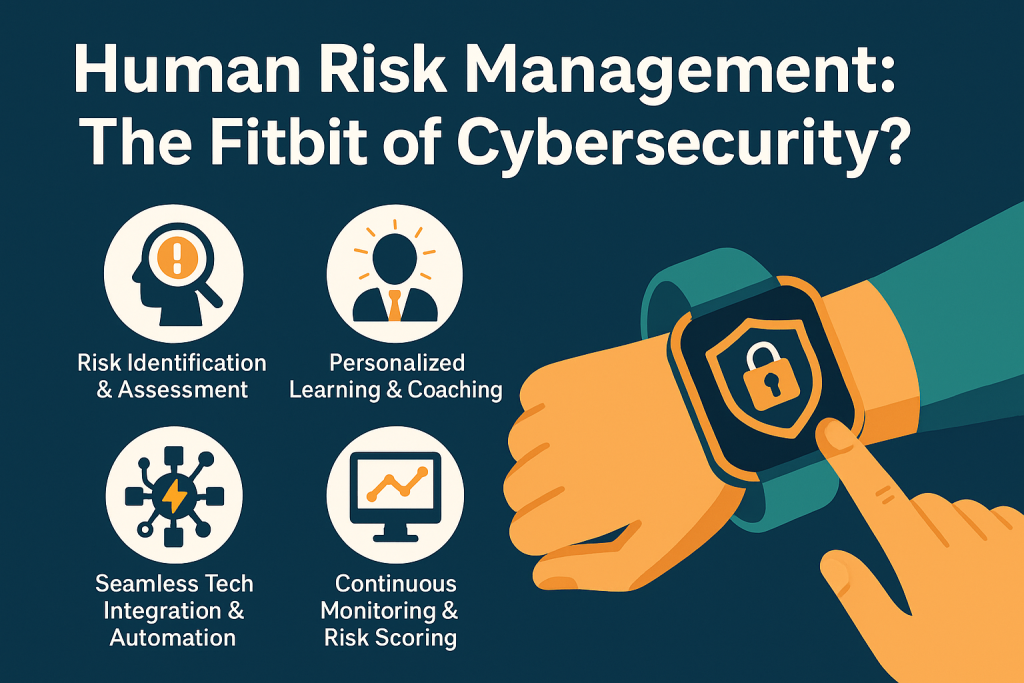
Human Risk Management: The Fitbit of Cybersecurity?

Let’s face it—old-school security awareness training is like a dusty VHS tape of a corporate seminar: outdated, one-size-fits-none, and something everyone fast-forwards through. Enter Human Risk Management (HRM): the shiny, AI-powered and all encompassing upgrade that doesn’t just train your people, it actually measures and changes behavior. Behaviour change is the real goal right, so think of it as the cybersecurity version of a Fitbit… but for your users’ digital hygiene.

The HRM Playbook (aka SAT Is Growing Up )

1. Risk Identification & Assessment
Forget generic quizzes, a quality HRM platform can use real data and AI analysis to spot risky behavior in the wild. From simulated phishing tailored to your user’s role or past errors, to behavioral pattern analysis, it’s like having a cyber-sleuth watching for red flags. Time is a valuable commodity, and many organizations don’t have the time to look at each user and figure out what they need, that’s where employing AI agents really shine!

2. Personalized Learning & Coaching
No more “click-through this 45-minute slideshow” or “go sit down and watch this boring, generic presentation for the next hour.” HRM delivers microlearning, real-time nudges, and coaching that actually resonates. If people don’t understand how training, any kind of training really, applies to them, they aren’t going to absorb it and they certainly won’t change their behavior. Help them see how they are impacted by the situation, and then how they can protect against it.

3. Seamless Tech Integration & Automation
A good HRM platform plugs into your existing tech (like M365 or Slack) and responds instantly. Spot a risky email behavior? It gets flagged, the user gets coached, and you don’t even have to lift a finger. There are valid arguments on both sides of the time-of-failure nudge issue, but I firmly believe that if done in a gentle and non-demeaning way (not making them feel stupid for the mistake), it can have great results. Messaging is everything here.

4. Continuous Monitoring & Risk Scoring
This isn’t set-it-and-forget-it training. A good HRM platform constantly tunes risk scores, re-targets training, and offers insights that executives actually care about—because yes, cybersecurity can have ROI. A really good HRM platform can even limit the ability of users to take certain actions based on their risk scores.

If Bob in accounting (all names are fictious and do not reflect real people except purely by accident 😀 ) has failed the last few social engineering simulations, do you really want him to be able to instantly respond to emails from an outside organization that are spoofing an email address, or opening a potentially infected file without some additional scrutiny? Sorry Bob, a high risk score plus a high risk message might equal an additonal look by secruity before you get to interact with it.

HRM vs. Security Awareness Training: The Showdown

FeatureTraditional SATHuman Risk Management (HRM)
MethodTell, test, repeatIdentify, quantify, coach in real time
Training StyleOne-size-fits-allPersonalized, dynamic
Behavior ControlStatic quizzesAI-driven nudges & automation
Metrics & CultureCompliance checkboxesReal behavior change & culture shift

TL;DR

HRM is SAT on performance-enhancing cyber-steroids, and while SAT is part of HRM, but it’s not the whole thing. HRM includes email filtering, focused and relevant SAT, tailored phishing/social engineering simulations, point-of-failure training, Data Leakage Prevention (DLP), and credential management, in other words, dealing with any risk a human may introduce to the organization. This is not something that we used to be able to do well at an individual basis, especially in medium to large organizations, but technology has evolved to the point that agentic AI is finally making it possible without sucking up all of the available security team resources. Embrace it and love it, because the attacks are getting too good to stick with our old ways.

A good HRM platform doesn’t just tell users what should happen, it makes sure the right stuff does happen and monitors it, kind of like the trusty old Fitbit.

Categories
Cybersecurity

Inside Proton66: The VIP Lounge of Bulletproof Hosting (Now With Extra Malware!)

Cyber pros, let’s talk shop. You know bulletproof hosting isn’t new—but the name Proton66 has probably come across your radar more than once. Think of it as the five-star resort for cybercriminals: anonymity, legal gray zones, uptime you’d kill for (pun intended), and a client list straight out of an FBI watchlist.

Bulletproof Hosting: Still the Cockroach of Hosting Services

We’re talking about hosting that caters to phishing sites, malware payloads, botnet command-and-control centers, and whatever else you’d rather not find in your SIEM. These providers bank on:

  • Obfuscation: VPN layers, rotating proxies, and Bitcoin payments that keep attribution in the realm of fantasy.
  • Jurisdictional Evasion: Based in countries where takedown requests get filed straight into the trash folder.
  • DDoS Hardening: Ironically, they defend themselves better than some enterprises do.

Proton66: Built to Break the Rules (and Your Defenses)

Established in the early 2010s, Proton66 didn’t just show up—it evolved. Today, it’s one of the more resilient bulletproof hosts, with a reputation for playing digital shell games at scale.

What Sets Proton66 Apart (and Keeps Us Up at Night)

  1. User Cloaking That Works
    • VPNs and proxies stitched together in ways that would make your red team jealous.
    • Cryptocurrency payments—because no one audits the blockchain like they should.
  2. “Legal” Loophole Leverage
    • Operating under Russia’s anything-goes approach to content regulation.
    • Serves everything from phishing kits to full ransomware deployments with zero shame.
  3. Resilient Infrastructure
    • DDoS mitigation that rivals large CDNs.
    • Fast rotation of IPs and infrastructure makes takedowns frustrating at best, useless at worst.

Real-World Impact

Proton66 isn’t theoretical. This host is linked to:

  • Major Ransomware Campaigns: Infrastructure for locker payloads, payment sites, and leak portals.
  • Illicit Marketplaces: Hosting forums and shops peddling credentials, financial data, and exploit kits.

How the Cybersecurity World is Pushing Back

Yes, we’re fighting back—but with mixed success.

  • Threat Intelligence Collaboration: Analysts and ISACs are trading IOCs like Pokémon cards. It helps—but Proton66 still breathes.
  • Legislative Theater: Global discussions are happening, but enforcement is slow and patchy.

Why It Should Be on Your Radar

You’re not just battling malware or chasing alerts—you’re dealing with the infrastructure that enables it. Proton66 makes it possible for cybercriminals to scale with confidence.

Legit hosting providers are having to adapt by:

  • Upgrading DDoS Defense: Because when attackers don’t fear takedowns, they’ll flood the competition.
  • Tightening Compliance and Visibility: Regular audits, better logging, and identity checks that would make Proton66 users sweat.

TL;DR

Proton66 isn’t going away on its own. It’s a resilient, jurisdiction-shielded platform that helps bad actors stay in business. Understanding how it operates can help you:

  • Improve threat hunting and attribution.
  • Justify the budget for deeper network forensics.
  • Advocate for policy changes—both internal and external.

So while law enforcement and legislators play geopolitical chess, we’re the ones manning the firewall. Stay sharp out there.

Sources:

  1. CyberScoop. (2022). “Inside the Dark Side of Bulletproof Hosting: Lessons from Cyber Crime Investigations.”
  2. BBC News. (2021). “Cyber Criminals: How Bulletproof Hosting Services Evade Law Enforcement.”
  3. Domain Magazine. “The Rise of Bulletproof Hosting Services: A Comprehensive Analysis.”
Categories
Cybersecurity

How are Ransomware Groups Evolving in 2025?

Introduction

As we move into the 2nd half of 2025, the dynamics of ransomware attacks are becoming increasingly sophisticated, paving the way for a new era in cyber threats. Cybersecurity professionals must stay ahead of these trends to protect their organizations effectively. Let’s explore how ransomware groups are evolving, the new tactics they are deploying, and how you can defend against these emerging threats.

The State of Ransomware in 2025

Ransomware attacks have seen a dramatic increase over the past few years, both in frequency and impact. According to a report by Cybersecurity Ventures, ransomware damages are expected to reach $265 billion annually by 2031, indicating a surge from an estimated $20 billion in damages in 2021. This growth underscores the evolution of ransomware tactics, necessitating an understanding of how these groups operate.

Emerging Trends in Ransomware Attacks

  • Ransomware-as-a-Service (RaaS): RaaS has democratized ransomware, allowing even inexperienced cybercriminals to launch attacks. Reports suggest that RaaS offerings have quadrupled since 2022, showing how accessibility is fueling the scalability of ransomware operations.
  • Targeting Critical Infrastructure: Ransomware groups are shifting their focus towards critical infrastructure sectors such as healthcare, finance, and energy. The Colonial Pipeline and JBS Food incidents in 2021 highlighted this trend and served as a wake-up call for both the public and private sectors.
  • Double and Triple Extortion: Attackers are not only encrypting files but also stealing sensitive data to leverage further ransom demands. A 2023 report indicated that over 60% of ransomware groups have adopted a double extortion strategy, with triple extortion becoming a significant concern as they threaten to expose data on social media if demands are not met.
  • Geopolitical Influences: Ransomware is increasingly influenced by geopolitical situations. Cybercriminals in specific regions may operate under the sanctuary of their governments, leading to a rise in state-sponsored attacks targeting rivals.

New Techniques Employed by Ransomware Groups

  • AI and Machine Learning: Attackers are beginning to use AI tools to automate attacks and personalize phishing emails. This shift is making it harder for organizations to detect and thwart attempted breaches.
  • Social Engineering Attacks: Cybercriminals are becoming skilled at using social engineering techniques to manipulate victims into giving up sensitive information or installing malware.
  • Use of Cryptocurrency: Ransomware groups continue to utilize cryptocurrencies for anonymity, with transactions increasing by over 200% since 2023.

Defensive Strategies to Combat Evolving Ransomware Threats

To effectively counter the evolving tactics of ransomware groups, cybersecurity professionals must implement proactive strategies:

  • Regular Backups: Maintain and regularly test backups in a secure location. This practice ensures that in case of a ransomware attack, organizations can recover data without succumbing to demands.
  • Training and Awareness: Regular training sessions focused on recognizing phishing attempts and social engineering tactics can empower employees to act as the first line of defense.
  • Up-to-Date Security Solutions: Employing advanced threat detection and response tools is critical. Consider solutions that leverage AI and machine learning to stay ahead of evolving threats.
  • Incident Response Plans: Create robust incident response plans that include clear roles, communication strategies, and recovery processes to minimize the impact of an attack.

Conclusion

The evolution of ransomware groups in 2025 calls for heightened vigilance from cybersecurity professionals. By understanding their emerging tactics and adapting defensive strategies, organizations can better protect themselves from potential threats. Stay informed and be proactive in your cybersecurity measures to combat the continuously evolving landscape of ransomware.

Categories
Cybersecurity

Security Awareness Training and Phishing Simulations: A Vital Layer in Cyber Defense

If you know me, you know that I am passionate about cybersecurity and feel that the human element is too often ignored or handled with very little focus. This is why I think this is a mistake.

In the modern threat landscape, cyberattacks have become more than just a technical nuisance, they’re a constant and evolving menace. Organizations of every size are in the crosshairs, and unfortunately, there’s no magic solution. But if there’s one area where a lot of damage can be prevented, it’s by addressing human risk. That’s one place where security awareness training and simulated phishing exercises come into play. They’re not just another checkbox; they’re a crucial part of your layered security strategy.

Training and simulated phishing is not going to make the problem go away, but neither are any technical controls. These things need to be used together and we have to consider preventative controls to keep social engineering attacks from reaching the users, non-technical controls (*cough* *cough* *training*) for when they do, and more controls in case the user has a lapse in judgement and has an interaction with the attack. Defense is like an onion (or perhaps an ogre) and has layers. Here I’m talking specifically about the education part.

The Threat Landscape: Evolving and Ruthless

Cybercriminals don’t discriminate. They use whatever works, and increasingly, that means targeting people. Whether it’s ransomware, social engineering, or good old-fashioned social engineering, bad actors rely heavily on exploiting human error to get a foot in the door. It’s not the users fault really. We are all human and subject to making mistakes if we get the right message, about the right thing, at the right time. I can tell you stories about myself and other advocates having all falling for simulated phishes at one time or the other. It really is easy to do and it’s not about how smart we are, so let’s stow the blame and work on ways to equip people to protect themselves.

  • Phishing’s Persistence
    The FBI’s Internet Crime Complaint Center reported over 300,000 phishing complaints in a single year. That’s not noise—it’s a wake-up call.
  • The Human Factor
    According to KnowBe4 (hey, I know them!), a leading provider of security awareness training, a substantial number of successful breaches stem from employees clicking on malicious content. Training isn’t optional, it’s essential.

Why Security Awareness Training Matters

Think of your employees as the last line of defense. You wouldn’t send soldiers into battle without training, or a surgeon into the O.R. without practice. Cybersecurity should be no different.

  • Enabling Human Firewalls
    Trained employees recognize red flags and stop attacks before they start.
  • Faster Incident Detection
    Educated users identify and report threats early, speeding up your response.
  • Compliance and Risk Reduction
    Regulations like GDPR and HIPAA demand security awareness efforts. Noncompliance can be costly.

Simulated Phishing: Practice That Pays Off

You test your fire alarms. Why not your people? Simulated phishes are not about tricking people. Crazy thought huh? It’s about giving them a chance to practice what they learned in training, without the risk to the organization. Messaging around this is critical so users know you are not trying to make them look or feel foolish, but instead giving them a chance to practice. This helps them at home as well as in the organizations. Scammers and scams are a part of life, the skills used to spot scams are invaluable personally as well.

  • Behavioral Conditioning
    Simulated phishing builds reflexes. Over time, employees become more resilient. We want to change behavior, not just throw information at people.
  • Cultural Shift
    Regular testing embeds security into your organization’s culture. As more people change behavior, the culture shifts and before you know it, there is momentum.
  • Actionable Metrics
    These exercises offer real data to target training and track improvements. There is good information here, such as the types of attacks certain people, departments, or even the whole organization, are more likely to fall for. Use this information to make education have a better ROI. Why waste valuable attention span and training teaching people stuff they already have a firm grip on?

But Isn’t It Expensive?

Training costs money, but a breach costs a lot more. IBM estimates the average breach at $4.45 million. Some studies are higher, some a little lower, but all agree that it’s expensive and can have a serious impact on your brand reputation. That click on a fake invoice email could lead to ransomware, stolen data, or worse, and frankly there are a lot of other way more expensive products/controls that don’t do as well. Be wise when looking at ROI.

Building a Smart Program

  • Know Your Baseline
    Evaluate where your team stands before you start.
  • Stay Current
    Update training regularly to match the latest threats and provide short modules fairly often.
  • Keep It Engaging
    Boring or irrelevant training doesn’t work. Use variety and interactivity to keep people interested.

Final Thoughts

Let’s be real, cyberattacks aren’t going away and technology alone won’t save you. Arm your employees with knowledge and experience. Security awareness and phishing simulations are not “nice to haves”, they’re a critical part, but not the only part, of a human risk management (HRM) program..

Categories
Uncategorized

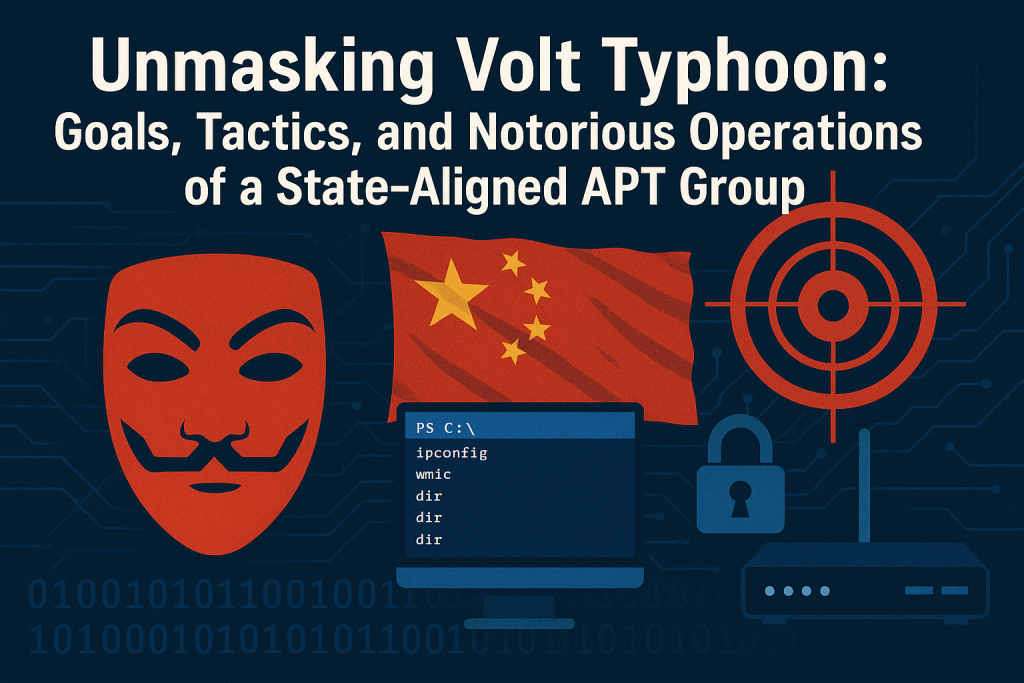
Unmasking Volt Typhoon: Goals, Tactics, and Notorious Operations of a State-Aligned APT Group

In the escalating cyber conflict between global superpowers, Volt Typhoon has emerged as one of the most stealthy and strategically significant state-aligned APT actors. Believed to be linked to the People’s Republic of China, this group exemplifies a new class of cyber threat — one that blends deep technical capability with long-term geopolitical strategy.

Goals of Volt Typhoon

Volt Typhoon isn’t your typical smash-and-grab cybercrime operation. Instead, their actions point to a far more chilling agenda:

  1. Strategic Espionage:
    Their operations are focused on gathering intelligence across U.S. critical infrastructure sectors, including communications, transportation, maritime, and energy.
  2. Pre-positioning for Disruption:
    Their long-term persistence inside networks suggests preparation for potential sabotage in the event of future geopolitical conflict — particularly involving Taiwan.
  3. Operational Stealth:
    They deliberately avoid loud, flashy malware. Their main goal is to stay undetected for as long as possible, building access footholds that could be activated in a crisis.

Tactics and Strategies

Volt Typhoon’s tradecraft is defined by subtlety and sophistication:

  • Living off the Land (LotL):
    The group avoids custom malware and instead uses built-in network administration tools like:
    • PowerShell
    • WMI
    • netsh
    • ipconfig
    • whoami
  • Hands-on-Keyboard Intrusions:
    Once inside, Volt Typhoon often manually interacts with compromised systems, suggesting highly skilled operators.
  • Credential Access and Lateral Movement:
    They harvest credentials and use them to pivot within the environment — frequently targeting domain controllers and administrator accounts.
  • Command and Control (C2):
    Their communications often flow through compromised SOHO (small office/home office) network devices, like routers and firewalls, to obscure their origin.
  • Persistence and Evasion:
    The group has demonstrated advanced techniques for avoiding detection, including disabling security logging and clearing event logs.

Notable Incidents and Campaigns

1. U.S. Critical Infrastructure Infiltration (2021–2023)

  • In 2023, Microsoft and CISA jointly disclosed that Volt Typhoon had been operating in U.S. critical infrastructure networks — undetected — for up to two years.
  • Their targets included Guam, a strategic U.S. military hub in the Pacific.
  • No malware was found — instead, attackers used native OS tools and compromised edge devices for stealth.

2. Joint Cybersecurity Advisory (May 2023)

  • A rare joint alert was issued by NSA, CISA, FBI, and their international counterparts in the Five Eyes alliance.
  • It warned that Volt Typhoon was actively maintaining access in telecommunications, transportation, water, and energy sectors.

3. Router Exploitation for Stealth

  • The group routinely exploited outdated Fortinet and Cisco devices to maintain persistence and obscure traffic.
  • This allowed Volt Typhoon to use compromised routers as proxy nodes for their operations — hiding their real location and making takedown efforts more difficult.

Defensive Recommendations

To defend against Volt Typhoon, organizations should:

  • Harden Edge Devices:
    Patch SOHO routers, firewalls, and VPN appliances. Replace EoL equipment when possible.
  • Monitor for LotL Activity:
    Watch for unusual use of PowerShell, WMI, and other administrative tools — especially during off-hours.
  • Segment Critical Infrastructure:
    Limit lateral movement opportunities by using network segmentation and access controls.
  • Enable Comprehensive Logging:
    Ensure all critical systems and domain controllers are logging security events and cannot have logs tampered with easily.
  • Conduct Threat Hunting:
    Look for signs of persistent access, including odd scheduled tasks, new local accounts, or unfamiliar processes running under SYSTEM privileges.

Sources

  1. Microsoft Threat Intelligence – Volt Typhoon: State-Aligned Actor Gathers Intelligence on Critical Infrastructure
  2. CISA Joint Cybersecurity Advisory – People’s Republic of China State-Sponsored Cyber Actor Living off the Land to Evade Detection
  3. The Record – FBI cyber leader: US can’t forget about China’s ‘Typhoon’ groups amid Mideast conflict

Categories
Uncategorized

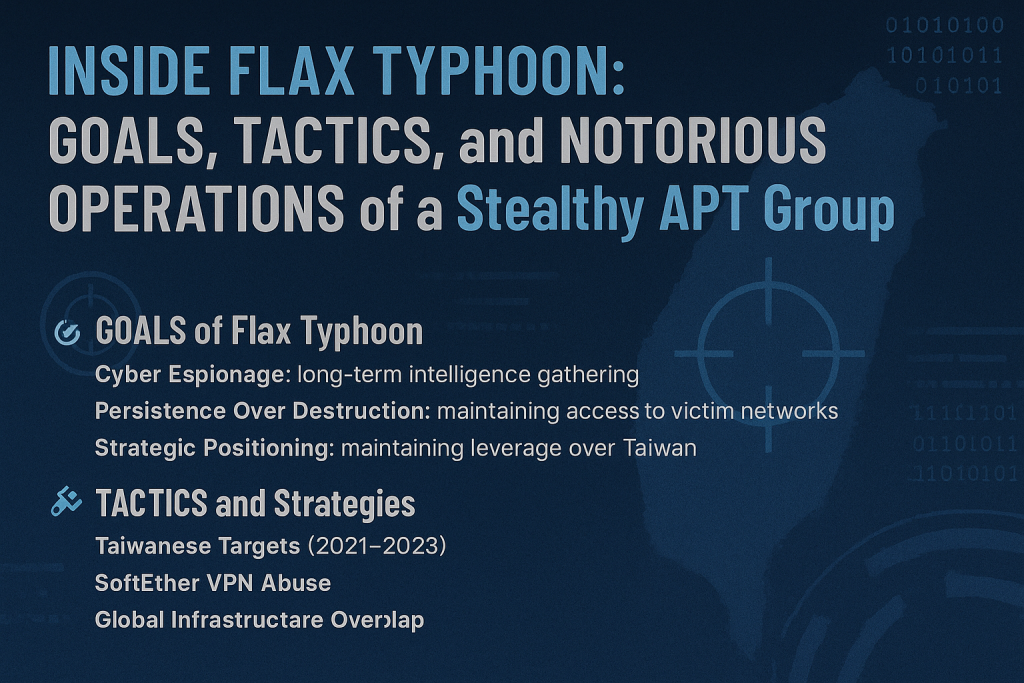
Inside Flax Typhoon: Goals, Tactics, and Notorious Operations of a Stealthy APT Group


In the intricate world of cyber warfare, state-sponsored Advanced Persistent Threat (APT) groups play a long game — one defined by stealth, persistence, and geopolitical motives. Among these groups, Flax Typhoon has emerged as a notable actor due to its unusual low-profile strategies and targeting patterns.

Who Is Flax Typhoon?

Flax Typhoon is a Chinese APT group that primarily targets organizations in Taiwan, though its infrastructure and tactics have implications far beyond the island. This threat actor is believed to operate with espionage and persistent access as its primary objectives rather than quick-impact sabotage or financially motivated attacks.

Goals of Flax Typhoon

Cyber Espionage:
Their main objective appears to be long-term intelligence gathering against Taiwan-based critical sectors, including education, government, and manufacturing.

Persistence Over Destruction:

Unlike ransomware gangs or destructive threat actors, Flax Typhoon focuses on maintaining access to victim networks for extended periods — quietly monitoring activities, extracting sensitive data, and potentially preparing for future disruptive campaigns.

Strategic Positioning:

Their activity aligns with China’s broader geopolitical interests, particularly in maintaining leverage over Taiwan. Persistent access to key networks could be useful in both peacetime surveillance and potential wartime disruption scenarios.

Tactics and Strategies

Flax Typhoon demonstrates a strong preference for “living off the land” techniques, meaning they rely on tools and features already present in operating systems to blend in and evade detection. Key tactics include:

Exploitation of Known Vulnerabilities:
Initial access is often gained through public-facing servers, with known vulnerabilities in web services and applications being common entry points.

Use of Legitimate Tools:

After access, the group avoids deploying traditional malware. Instead, it uses:

  • PowerShell scripts
  • Remote Desktop Protocol (RDP)
  • Windows Management Instrumentation (WMI)
  • LOLbins (Living Off the Land Binaries) like cmd.exe, net.exe, sc.exe, and schtasks.exe

Credential Dumping and Lateral Movement:

Once inside, Flax Typhoon often extracts credentials and moves laterally through the network using native Windows tools, reducing their footprint and evading endpoint detection.

Persistence Mechanisms:

Scheduled tasks and legitimate VPN clients (like SoftEther VPN) are often used to maintain stealthy remote access.

Known Incidents and Campaigns

Although Flax Typhoon operates with a high degree of stealth, some of its campaigns have been uncovered:

  1. Taiwanese Targets (2021–2023)
    Microsoft reported that Flax Typhoon had been active in targeting critical infrastructure and education organizations in Taiwan since mid-2021.

Victims included government agencies, IT service providers, and manufacturing companies.

Notably, no malware was deployed, and in many cases, organizations did not detect the intrusion until external researchers notified them.

  1. SoftEther VPN Abuse
    The group was found using SoftEther VPN, a legitimate open-source VPN solution, to tunnel traffic and maintain access to compromised systems — often through modified configurations that masked their presence.
  2. Global Infrastructure Overlap
    Although focused on Taiwan, Flax Typhoon infrastructure overlaps with campaigns linked to other Chinese APT groups, raising concerns about shared tooling and coordination.

Defensive Measures

To defend against Flax Typhoon and groups like it, organizations should:

  • Regularly patch internet-facing systems.
  • Monitor for suspicious use of native tools (e.g., unusual PowerShell activity or new scheduled tasks).
  • Implement least-privilege access models and closely audit RDP usage.
  • Detect use of uncommon VPN clients or unauthorized tunneling software.

Sources

Microsoft Threat Intelligence – Flax Typhoon: Espionage-focused threat actor targets organizations in Taiwan

BleepingComputer – Flax Typhoon: Chinese hackers use SoftEther VPN to stay stealthy

The Hacker News – Chinese Hackers Target Taiwan With ‘Living off the Land’ Tactics

Recorded Future – APT Profile Overview (internal threat intelligence reports)

Categories
Cybersecurity

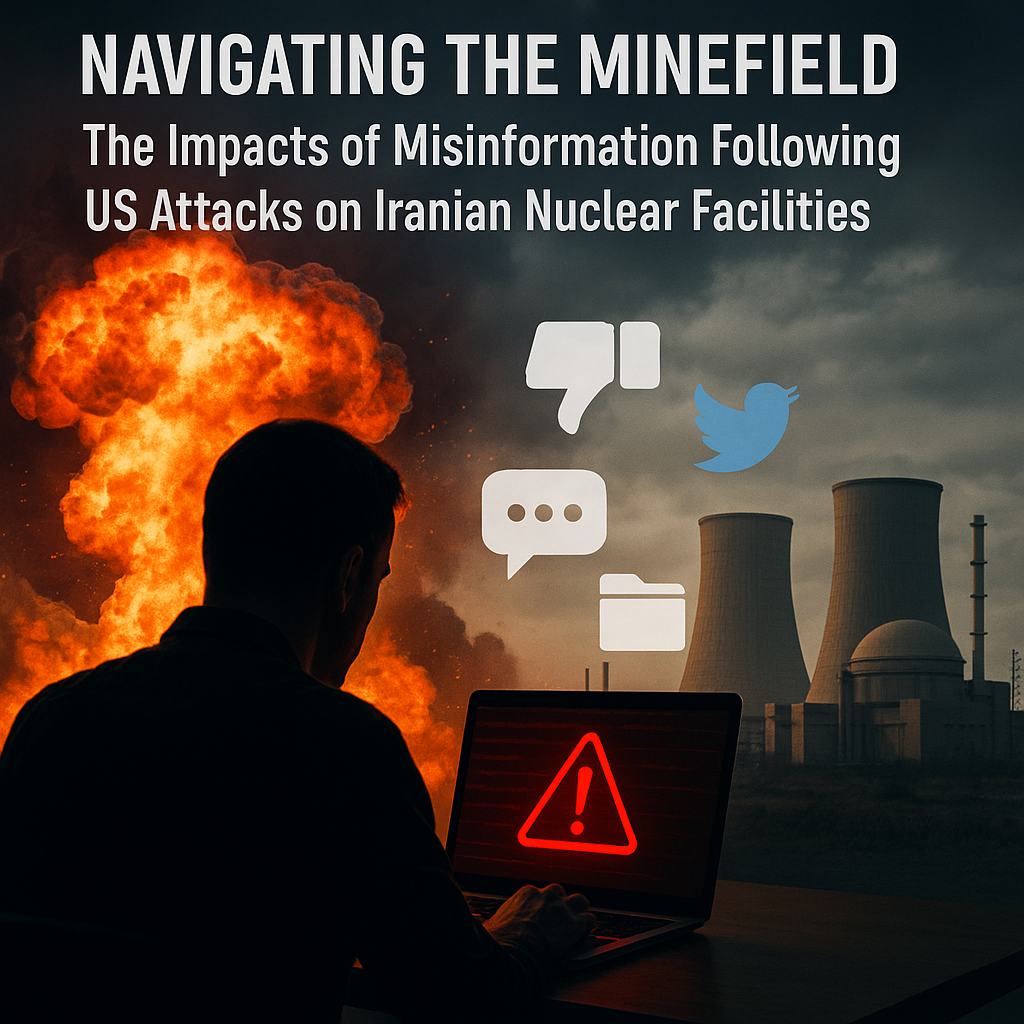
Navigating the Minefield: The Impacts of Misinformation Following US Attacks on Iranian Nuclear Facilities

In a world where information travels at the speed of light, the ramifications of military actions can extend far beyond the battlefield. Recently, the United States bombed specific Iranian nuclear facilities, a move that has undoubtedly heightened tensions in an already volatile region. However, what’s also quite concerning is the pervasive misinformation and disinformation campaigns that will likely arise in the wake of such events. Let’s explore the dangers of these campaigns, particularly on social media platforms, and why cybersecurity professionals must remain vigilant.

Understanding Misinformation and Disinformation

Before diving deeper into the consequences of misinformation, it’s essential to clarify the terms:

  • Misinformation refers to false or misleading information that is spread without malicious intent. It often arises out of confusion, misunderstandings, or the haste to share news.
  • Disinformation, on the other hand, is deliberately false information designed to mislead or manipulate.

Both forms can significantly impact public perception and contribute to panic and distrust, especially in the realm of geopolitics.

The Dangers of Misinformation in Times of Crisis

When significant military actions are taken, the potential for misinformation escalates dramatically. Let’s examine some of the dangers:

1. Escalation of Tensions

Misinformation may exacerbate existing tensions between nations or communities. For example:

  • Misreporting the extent of damage caused by the airstrikes could incite further retaliatory actions.
  • False assertions made on social media can provoke protests or conflicts among different political factions.

2. Public Confusion and Distrust

A flurry of conflicting reports can lead to:

  • Chaos as individuals struggle to discern fact from fiction.
  • Distrust in legitimate news sources, causing the public to seek information from questionable sources, which perpetuates the cycle of misinformation.

3. Social Media Exploitation

Social media platforms are ground zero for misinformation. The speed and ease with which information spreads can be alarming:

  • Deepfakes, a form of synthetic media, can create realistic but entirely fabricated videos or audio that distort the truth and mislead viewers. Not all media is faked either, some is just cleverly edited to be deceptive.
  • Hashtags and trending topics can amplify misinformation campaigns, as users unwittingly share misleading content.

4. Impact on Decision-Making

Misinformation can directly influence decision-making at various levels, from the individual to governmental agencies. A civilian might act based on incorrect news, while leaders may feel pressured to respond to public outcry based on false narratives.

Strategies to Combat Misinformation

As cybersecurity professionals, understanding the landscape of misinformation is crucial. Here are several strategies to mitigate its impact:

1. Promote Critical Thinking

Encouraging critical thinking skills can empower the public to evaluate the credibility of information sources:

  • Host workshops or webinars that guide individuals in identifying reliable sources of information.
  • Utilize social media platforms to disseminate guidelines on spotting misinformation.

2. Implement Robust Cybersecurity Measures

Organizations should strengthen their cybersecurity frameworks to:

  • Protect against the spread of false information through their digital channels.
  • Train employees on how to recognize and counter misinformation.

3. Engage with Credible Sources

Promoting reliance on credible news outlets is essential. Share links to reputable sources and fact-checking websites to help the community make informed decisions.

4. Foster Transparency

Encourage transparency in media reporting, particularly during crises. Rapid fact-checking and correction of misinformation can help restore public trust in legitimate sources.

Conclusion: The Crucial Role of Cybersecurity Professionals

As the world grapples with the fallout from the US’s recent military actions in Iran, the threat of misinformation and disinformation becomes more pronounced. Cybersecurity professionals play a vital role in curbing these threats. By fostering critical thinking, implementing robust cybersecurity measures, and promoting transparency, we can combat the tide of misinformation that threatens to undermine our democratic processes and societal trust.

What Do We Do?

Stay alert and informed. Follow reputable news sources, verify information before sharing, and encourage your community to do the same. Together, we can navigate the minefield of misinformation and disinformation in these tumultuous times.


Categories
Cybersecurity

Understanding Salt Typhoon: A Deep Dive into the Tactics of an APT Group Targeting U.S. Infrastructure

In today’s interconnected world, cybersecurity threats continue to evolve, posing significant risks to critical infrastructures and government agencies. Among the most prominent adversaries in this realm is Salt Typhoon, an Advanced Persistent Threat (APT) group that has made headlines for its sophisticated attacks targeting U.S. systems. In this post, we will explore the tactics and strategies employed by Salt Typhoon, as well as some notable incidents attributed to this cybercrime group, shedding light on their strategies and providing insights for cybersecurity professionals.

What is Salt Typhoon?

Salt Typhoon is recognized as an APT group that conducts long-term, targeted cyber campaigns against high-value entities, particularly in the realm of U.S. government and critical infrastructure. Unlike opportunistic cybercriminals, APT groups like Salt Typhoon employ a stealthy approach, aiming for persistence within their targets’ networks while exfiltrating sensitive data and possibly compromising national security.

Key Tactics and Strategies of Salt Typhoon

To understand how Salt Typhoon operates, it’s vital to dissect their methodologies. Here’s a closer look at the tactics they commonly employ:

1. Phishing Campaigns

Phishing remains a primary attack vector for Salt Typhoon, allowing them to gain initial access to targeted organizations through deception.

  • Spear Phishing: This tactic involves customized emails aimed at specific individuals within an organization, often impersonating trusted sources to trick recipients into revealing sensitive information or credentials.
  • Business Email Compromise (BEC): Here, attackers compromise legitimate business email accounts to initiate unauthorized transactions or access sensitive company data.

2. Malware Deployment

Upon establishing initial access, Salt Typhoon frequently employs various forms of malware to ensure control over the targeted systems:

  • Remote Access Trojans (RATs): These tools enable attackers to control the infected system remotely, allowing for extensive surveillance and data collection.
  • Credential Dumping Tools: They often utilize tools to extract stored credentials from applications, facilitating further access within the network.

3. Lateral Movement

Once inside, Salt Typhoon does not stay idle. To maximize their reach, they engage in lateral movement through a network:

  • Exploiting Vulnerabilities: They identify and exploit unpatched vulnerabilities to gain access to adjacent systems.
  • Credential Sharing: Utilizing stolen credentials to maneuver within the network helps them access sensitive resources with minimal detection.

4. Data Exfiltration

Data exfiltration is often a primary objective for APT attacks. Salt Typhoon meticulously gathers data, ensuring it is transferred out of the network undetected:

  • Use of Encrypted Channels: They may encrypt data to avoid detection when exfiltrating it from the target network.
  • Scheduled Exfiltration: Timing data transfers during off-peak hours can minimize the risk of being caught.

5. Evasion Techniques

To stay under the radar, Salt Typhoon employs sophisticated evasion techniques:

  • Obfuscation: Many of their malicious payloads are designed to blend in with legitimate network traffic.
  • Fileless Malware: This technique involves utilizing tools that operate in-memory and do not leave traditional file traces on the disk, complicating detection efforts.

Notable Incidents Linked to Salt Typhoon

Salt Typhoon’s sophisticated tactics are not just theoretical; they have been involved in several high-profile incidents:

1. U.S. Government Agencies Breach

One of the most alarming incidents linked to Salt Typhoon involved infiltrating multiple U.S. government agencies. Through a well-crafted spear-phishing campaign, the group successfully compromised sensitive email accounts of high-ranking officials, leading to significant breaches of confidential communications and national security information.

2. Attacks on Critical Infrastructure

Infiltrations targeting critical infrastructure, such as utilities and transportation systems, have been another hallmark of Salt Typhoon’s activities. These attacks disrupt services and pose direct threats to public safety. For instance, there were reports of unsuccessful attempts to manipulate systems of power grid operators, emphasizing the potential impact of such cyber activities on societal functions.

3. Supply Chain Disruption

Salt Typhoon has also targeted third-party vendors as a strategic means to infiltrate larger networks. By compromising software providers, they can gain access to client systems without directly breaching their defenses—an effective strategy common among APT groups that enhances their reach and impact on organizations.

Protecting Against Salt Typhoon’s Tactics

For cybersecurity professionals, understanding how to defend against threats posed by Salt Typhoon is paramount. Here are some strategies to enhance your organization’s security posture:

  • Regular Training and Awareness Programs: Conducting comprehensive training sessions on recognizing phishing and social engineering techniques can reduce vulnerabilities.
  • Effective Patch Management: Routinely updating systems and software can protect against known vulnerabilities actively exploited by attackers.
  • Incident Response Planning: Establishing a well-documented incident response plan can help organizations respond swiftly to potential breaches, minimizing damage.

Conclusion

Salt Typhoon exemplifies the growing sophistication of APT groups targeting vulnerable infrastructures. By analyzing their tactics and recognizing past incidents, cybersecurity professionals can fortify defenses against future threats. The onus is on organizations to remain vigilant and proactive, implementing best practices in the realm of cybersecurity.

Stay informed and prepared to face these evolving threats. Consider evaluating your current cybersecurity strategies and enhancing protocols to safeguard your organization against adversaries like Salt Typhoon.


Sources

  1. Cybersecurity & Infrastructure Security Agency (CISA) – Cybersecurity Advisories on APT Tactics
    CISA.gov
  2. FireEye – Report on Advanced Persistent Threat Groups
    FireEye.com
  3. Mandiant – Overview of APT Group Activities
    Mandiant.com
  4. Reuters – Reporting on Cyber Incidents Involving APT Groups
    Reuters.com
  5. Symantec – Insight into Cyber Threat Landscape
    Symantec.com
Categories
The Jerich Show

Patch Me If You Can: Cyber Oops, Selfies & Seizures

In this episode of The Jerich Show, Erich Kron and Javvad Malik dive headfirst into the week’s most curious, cringeworthy, and critical cybersecurity stories.

First up: a global honeypot powered by over 5,300 compromised Cisco devices—courtesy of the ViciousTrap botnet. Then, it’s schadenfreude central as the developers of DanaBot malware accidentally infect themselves. Karma, meet keyboard.

We’ll also unpack Europol’s massive takedown of ransomware infrastructure, which led to the seizure of 300 servers and €3.5 million in crypto. Not to be outdone, two ATM heist suspects made their arrest even easier… by taking selfies mid-crime.

And finally, the UK’s NCSC shows us how to securely retire old tech—because tossing servers in the skip just isn’t secure policy.

Join Erich and Javvad for sharp takes, security snark, and the cybersecurity fails you’ll want to learn from (or at least laugh at).