
Categories
Cybersecurity

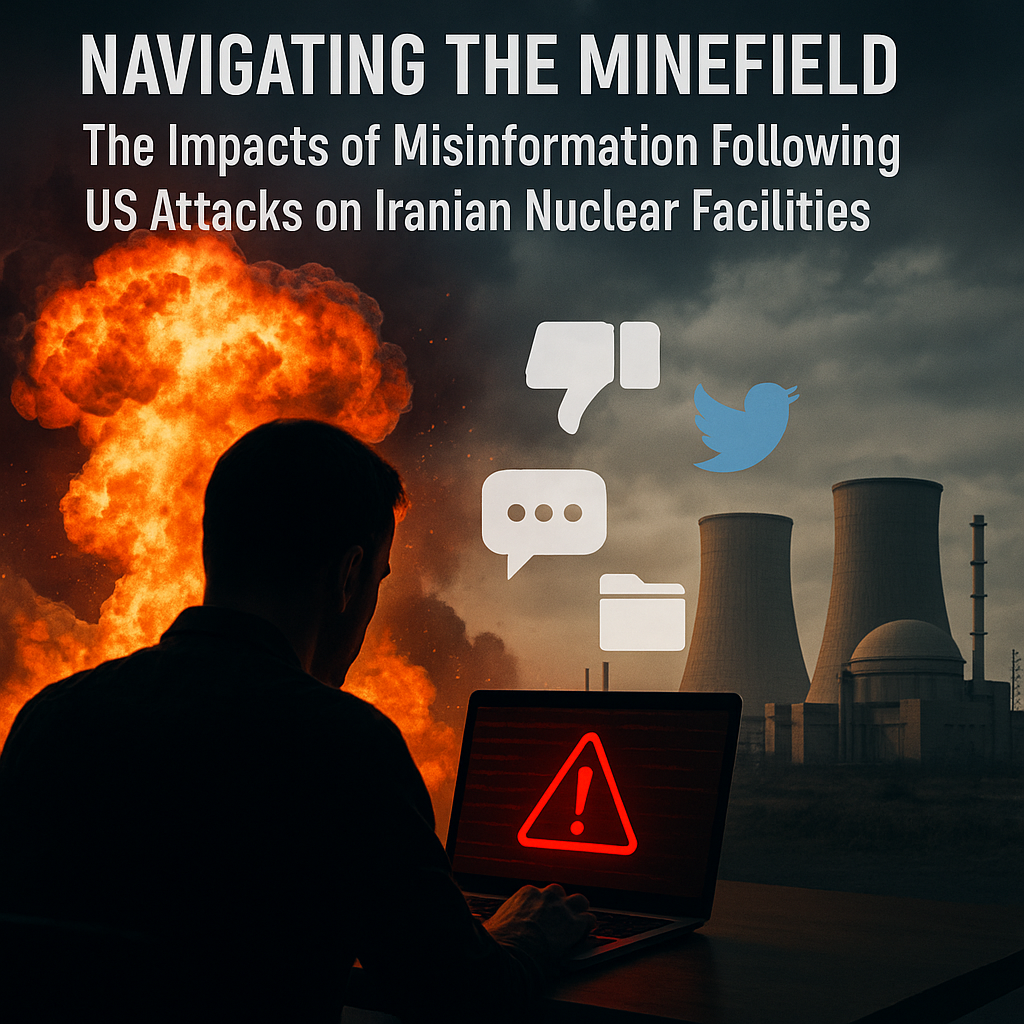
Navigating the Minefield: The Impacts of Misinformation Following US Attacks on Iranian Nuclear Facilities

In a world where information travels at the speed of light, the ramifications of military actions can extend far beyond the battlefield. Recently, the United States bombed specific Iranian nuclear facilities, a move that has undoubtedly heightened tensions in an already volatile region. However, what’s also quite concerning is the pervasive misinformation and disinformation campaigns that will likely arise in the wake of such events. Let’s explore the dangers of these campaigns, particularly on social media platforms, and why cybersecurity professionals must remain vigilant.

Understanding Misinformation and Disinformation

Before diving deeper into the consequences of misinformation, it’s essential to clarify the terms:

  • Misinformation refers to false or misleading information that is spread without malicious intent. It often arises out of confusion, misunderstandings, or the haste to share news.
  • Disinformation, on the other hand, is deliberately false information designed to mislead or manipulate.

Both forms can significantly impact public perception and contribute to panic and distrust, especially in the realm of geopolitics.

The Dangers of Misinformation in Times of Crisis

When significant military actions are taken, the potential for misinformation escalates dramatically. Let’s examine some of the dangers:

1. Escalation of Tensions

Misinformation may exacerbate existing tensions between nations or communities. For example:

  • Misreporting the extent of damage caused by the airstrikes could incite further retaliatory actions.
  • False assertions made on social media can provoke protests or conflicts among different political factions.

2. Public Confusion and Distrust

A flurry of conflicting reports can lead to:

  • Chaos as individuals struggle to discern fact from fiction.
  • Distrust in legitimate news sources, causing the public to seek information from questionable sources, which perpetuates the cycle of misinformation.

3. Social Media Exploitation

Social media platforms are ground zero for misinformation. The speed and ease with which information spreads can be alarming:

  • Deepfakes, a form of synthetic media, can create realistic but entirely fabricated videos or audio that distort the truth and mislead viewers. Not all media is faked either, some is just cleverly edited to be deceptive.
  • Hashtags and trending topics can amplify misinformation campaigns, as users unwittingly share misleading content.

4. Impact on Decision-Making

Misinformation can directly influence decision-making at various levels, from the individual to governmental agencies. A civilian might act based on incorrect news, while leaders may feel pressured to respond to public outcry based on false narratives.

Strategies to Combat Misinformation

As cybersecurity professionals, understanding the landscape of misinformation is crucial. Here are several strategies to mitigate its impact:

1. Promote Critical Thinking

Encouraging critical thinking skills can empower the public to evaluate the credibility of information sources:

  • Host workshops or webinars that guide individuals in identifying reliable sources of information.
  • Utilize social media platforms to disseminate guidelines on spotting misinformation.

2. Implement Robust Cybersecurity Measures

Organizations should strengthen their cybersecurity frameworks to:

  • Protect against the spread of false information through their digital channels.
  • Train employees on how to recognize and counter misinformation.

3. Engage with Credible Sources

Promoting reliance on credible news outlets is essential. Share links to reputable sources and fact-checking websites to help the community make informed decisions.

4. Foster Transparency

Encourage transparency in media reporting, particularly during crises. Rapid fact-checking and correction of misinformation can help restore public trust in legitimate sources.

Conclusion: The Crucial Role of Cybersecurity Professionals

As the world grapples with the fallout from the US’s recent military actions in Iran, the threat of misinformation and disinformation becomes more pronounced. Cybersecurity professionals play a vital role in curbing these threats. By fostering critical thinking, implementing robust cybersecurity measures, and promoting transparency, we can combat the tide of misinformation that threatens to undermine our democratic processes and societal trust.

What Do We Do?

Stay alert and informed. Follow reputable news sources, verify information before sharing, and encourage your community to do the same. Together, we can navigate the minefield of misinformation and disinformation in these tumultuous times.

Categories
Cybersecurity

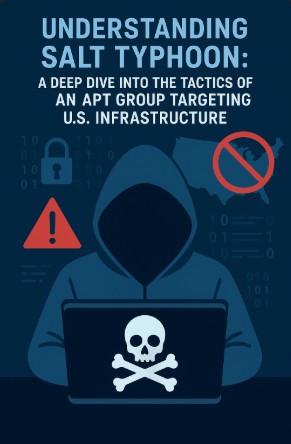
Understanding Salt Typhoon: A Deep Dive into the Tactics of an APT Group Targeting U.S. Infrastructure

In today’s interconnected world, cybersecurity threats continue to evolve, posing significant risks to critical infrastructures and government agencies. Among the most prominent adversaries in this realm is Salt Typhoon, an Advanced Persistent Threat (APT) group that has made headlines for its sophisticated attacks targeting U.S. systems. In this post, we will explore the tactics and strategies employed by Salt Typhoon, as well as some notable incidents attributed to this cybercrime group, shedding light on their strategies and providing insights for cybersecurity professionals.

What is Salt Typhoon?

Salt Typhoon is recognized as an APT group that conducts long-term, targeted cyber campaigns against high-value entities, particularly in the realm of U.S. government and critical infrastructure. Unlike opportunistic cybercriminals, APT groups like Salt Typhoon employ a stealthy approach, aiming for persistence within their targets’ networks while exfiltrating sensitive data and possibly compromising national security.

Key Tactics and Strategies of Salt Typhoon

To understand how Salt Typhoon operates, it’s vital to dissect their methodologies. Here’s a closer look at the tactics they commonly employ:

1. Phishing Campaigns

Phishing remains a primary attack vector for Salt Typhoon, allowing them to gain initial access to targeted organizations through deception.

  • Spear Phishing: This tactic involves customized emails aimed at specific individuals within an organization, often impersonating trusted sources to trick recipients into revealing sensitive information or credentials.
  • Business Email Compromise (BEC): Here, attackers compromise legitimate business email accounts to initiate unauthorized transactions or access sensitive company data.

2. Malware Deployment

Upon establishing initial access, Salt Typhoon frequently employs various forms of malware to ensure control over the targeted systems:

  • Remote Access Trojans (RATs): These tools enable attackers to control the infected system remotely, allowing for extensive surveillance and data collection.
  • Credential Dumping Tools: They often utilize tools to extract stored credentials from applications, facilitating further access within the network.

3. Lateral Movement

Once inside, Salt Typhoon does not stay idle. To maximize their reach, they engage in lateral movement through a network:

  • Exploiting Vulnerabilities: They identify and exploit unpatched vulnerabilities to gain access to adjacent systems.
  • Credential Sharing: Utilizing stolen credentials to maneuver within the network helps them access sensitive resources with minimal detection.

4. Data Exfiltration

Data exfiltration is often a primary objective for APT attacks. Salt Typhoon meticulously gathers data, ensuring it is transferred out of the network undetected:

  • Use of Encrypted Channels: They may encrypt data to avoid detection when exfiltrating it from the target network.
  • Scheduled Exfiltration: Timing data transfers during off-peak hours can minimize the risk of being caught.

5. Evasion Techniques

To stay under the radar, Salt Typhoon employs sophisticated evasion techniques:

  • Obfuscation: Many of their malicious payloads are designed to blend in with legitimate network traffic.
  • Fileless Malware: This technique involves utilizing tools that operate in-memory and do not leave traditional file traces on the disk, complicating detection efforts.

Notable Incidents Linked to Salt Typhoon

Salt Typhoon’s sophisticated tactics are not just theoretical; they have been involved in several high-profile incidents:

1. U.S. Government Agencies Breach

One of the most alarming incidents linked to Salt Typhoon involved infiltrating multiple U.S. government agencies. Through a well-crafted spear-phishing campaign, the group successfully compromised sensitive email accounts of high-ranking officials, leading to significant breaches of confidential communications and national security information.

2. Attacks on Critical Infrastructure

Infiltrations targeting critical infrastructure, such as utilities and transportation systems, have been another hallmark of Salt Typhoon’s activities. These attacks disrupt services and pose direct threats to public safety. For instance, there were reports of unsuccessful attempts to manipulate systems of power grid operators, emphasizing the potential impact of such cyber activities on societal functions.

3. Supply Chain Disruption

Salt Typhoon has also targeted third-party vendors as a strategic means to infiltrate larger networks. By compromising software providers, they can gain access to client systems without directly breaching their defenses—an effective strategy common among APT groups that enhances their reach and impact on organizations.

Protecting Against Salt Typhoon’s Tactics

For cybersecurity professionals, understanding how to defend against threats posed by Salt Typhoon is paramount. Here are some strategies to enhance your organization’s security posture:

  • Regular Training and Awareness Programs: Conducting comprehensive training sessions on recognizing phishing and social engineering techniques can reduce vulnerabilities.
  • Effective Patch Management: Routinely updating systems and software can protect against known vulnerabilities actively exploited by attackers.
  • Incident Response Planning: Establishing a well-documented incident response plan can help organizations respond swiftly to potential breaches, minimizing damage.

Conclusion

Salt Typhoon exemplifies the growing sophistication of APT groups targeting vulnerable infrastructures. By analyzing their tactics and recognizing past incidents, cybersecurity professionals can fortify defenses against future threats. The onus is on organizations to remain vigilant and proactive, implementing best practices in the realm of cybersecurity.

Stay informed and prepared to face these evolving threats. Consider evaluating your current cybersecurity strategies and enhancing protocols to safeguard your organization against adversaries like Salt Typhoon.


Sources

  1. Cybersecurity & Infrastructure Security Agency (CISA) – Cybersecurity Advisories on APT Tactics
    CISA.gov
  2. FireEye – Report on Advanced Persistent Threat Groups
    FireEye.com
  3. Mandiant – Overview of APT Group Activities
    Mandiant.com
  4. Reuters – Reporting on Cyber Incidents Involving APT Groups
    Reuters.com
  5. Symantec – Insight into Cyber Threat Landscape
    Symantec.com
Categories
The Jerich Show

Patch Me If You Can: Cyber Oops, Selfies & Seizures

In this episode of The Jerich Show, Erich Kron and Javvad Malik dive headfirst into the week’s most curious, cringeworthy, and critical cybersecurity stories.

First up: a global honeypot powered by over 5,300 compromised Cisco devices—courtesy of the ViciousTrap botnet. Then, it’s schadenfreude central as the developers of DanaBot malware accidentally infect themselves. Karma, meet keyboard.

We’ll also unpack Europol’s massive takedown of ransomware infrastructure, which led to the seizure of 300 servers and €3.5 million in crypto. Not to be outdone, two ATM heist suspects made their arrest even easier… by taking selfies mid-crime.

And finally, the UK’s NCSC shows us how to securely retire old tech—because tossing servers in the skip just isn’t secure policy.

Join Erich and Javvad for sharp takes, security snark, and the cybersecurity fails you’ll want to learn from (or at least laugh at).

Categories
The Jerich Show

From Rogue Radios to Hijacked Chips: Cyber Threats Go Global!

In this episode of The Jerich Show, join your favorite cybersecurity duo, Erich Kron and Javvad Malik, as they dive into some truly wild cybercrime stories making headlines around the globe. Hackers who’ve been terrorizing UK retailers have hopped the pond to target US companies, while Japan’s bold plan to double its cybersecurity workforce might mean saying sayonara to tough certifications. Meanwhile, the EU arms defenders with a shiny new vulnerability database, and the discovery of rogue communication devices lurking in Chinese-made solar inverters sparks fresh paranoia. Plus, could your CPU itself soon be held hostage by ransomware? Tune in for laughs, insights, and a healthy dose of cyber skepticism!

Stories from the show:

Hackers behind UK retail attacks now targeting US companies
https://www.bleepingcomputer.com/news/security/google-scattered-spider-switches-targets-to-us-retail-chains/

Japan aims to double cybersecurity specialists by 2030, relax certification requirements
https://asianews.network/japan-aims-to-double-cybersecurity-specialists-by-2030-relax-certification-requirements/

EU launches vulnerability database to tackle cybersecurity threats
https://therecord.media/eu-launches-vulnerability-database

CPU microcode hack could infect processors with ransomware directly
https://www.techradar.com/pro/security/cpu-microcode-hack-could-infect-processors-with-ransomware-directly

‘Rogue’ communication devices found on Chinese-made solar power inverters
https://www.utilitydive.com/news/rogue-communication-devices-found-on-chinese-made-solar-power-inverters/748242/

Categories
The Jerich Show

Lockbit hacked, Qlin jumps to #1 and Google gets serious against scams

In this episode, Erich and Javvad discuss how Lockbit appears to be hacked again, Qlin makes a jump to #1 in the ransomware game, Google gets serious against scams with Gemini, and more!


Google Rolls Out On-Device AI Protections to Detect Scams in Chrome and Android

https://thehackernews.com/2025/05/google-rolls-out-on-device-ai.html


Qilin Ransomware Ranked Highest in April 2025 with 72 Data Leak Disclosures

https://thehackernews.com/2025/05/qilin-leads-april-2025-ransomware-spike.html


LockBit ransomware gang hacked again

https://www.computing.co.uk/news/2025/security/lockbit-ransomware-gang-hacked-again


UK Cyber Insurance Claims Second Highest on Record

https://www.infosecurity-magazine.com/news/uk-cyberinsurance-claims-second/

Categories
The Jerich Show

Iran attacked,Huge DDoS Attack and more!

Erich and Javvad recap the top stories in Cybersecurity this week including the cyber attack on Iran and a huge DD0S attack. All this and More

Categories
The Jerich Show

Bad actors arrested, phishing with google, Darkula get’s an upgrade and more!

Erich and Javvad summarize this week’s cyber soap opera and bring you a tangled web of digital deceit, artificial “intelligence,” and just enough government extradition drama to keep things spicy.

From Spain With Wire Fraud: Alleged “Scattered Spider” member Tyler Buchanan thought sunny Spain was a safe hideout—until the long arm of U.S. justice said hola. Extradited for allegedly scamming Caesars and MGM, his toolkit included SIM swapping and social engineering. Welcome to America, Tyler—hope you like federal courtrooms.

Phishing with Google’s Seal of Approval: Meanwhile, phisherfolk are reusing Google’s DKIM signatures like they’re leftover lasagna—slapping them onto spoofed emails from no-reply@accounts.google.com and tricking even the most paranoid clickers. The result? Legit-looking credential traps hosted on Google Sites. It’s like gourmet phishing, served with a side of irony.

Darcula Gets a Brain Upgrade: And if you thought cybercrime required effort, think again. The Darcula phishing kit now uses generative AI to do all the heavy lifting. Bad grammar and clunky templates? Gone. Now, even your cousin Steve with zero hacking skills can impersonate a bank in 100 languages. Thanks, AI.

Tune in for a romp through the latest digital deceptions, complete with dark web drama and facepalms galore. Stay sharp—because the hackers definitely are.

Categories
The Jerich Show

Cyber prof goes missing, ransomware group hacked back, passwords stink, and more!

In this episode Erich and Javvad discuss a cyber professor that went away, a ransomware group hacks back, passwords are still poor, and more!

Categories
The Jerich Show

Old MS vuln left open, sperm bank breached, WordPress sites exploited and more!

In this episode, Erich and Javvad discuss a breach of a sperm bank in California, an 9-year old Microsoft vuln that they feel is too unimportant to patch (although it’s being exploited), and a hack of over 2000, WordPress sites

Categories
The Jerich Show

VSCode oopsie, Roblox is your problem, UK says cyber folks are underpaid, and more!

In this episode, Erich and Javvad discuss the VSCode extensions that was used by millions, and that Microsoft wrongly removed, Roblox tells parents if they want safe kids, that’s a ‘you’ problem, and the UK says cyberpros need to make more than the PM. This and more!